Structured preparation
Centralised exam preparation provides a clear starting point for the proposed offer.
FINALTICKS · MARKET STRATEGY
Customer segmentation and market intelligence for a test-preparation platform, linking the addressable audience with product priorities.
MARKET SIZING
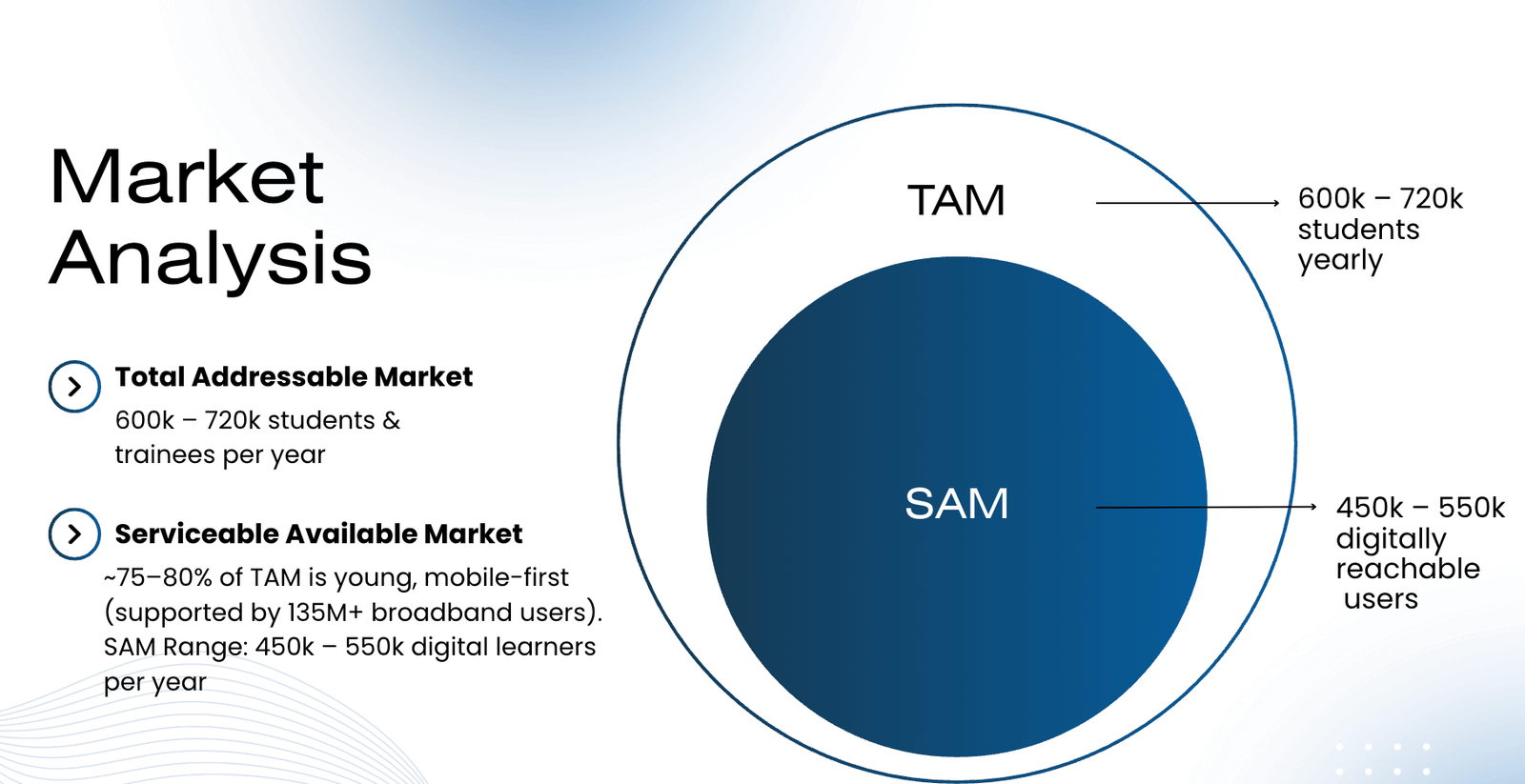
The supplied deck estimates a total addressable market of 600,000–720,000 students and trainees per year, with a serviceable available market of 450,000–550,000 digitally reachable learners.
These are deck estimates. Their sources, study year, geographic coverage, and methodology were not supplied, so they are presented as planning inputs rather than independently verified market totals.
SEGMENT INTELLIGENCE
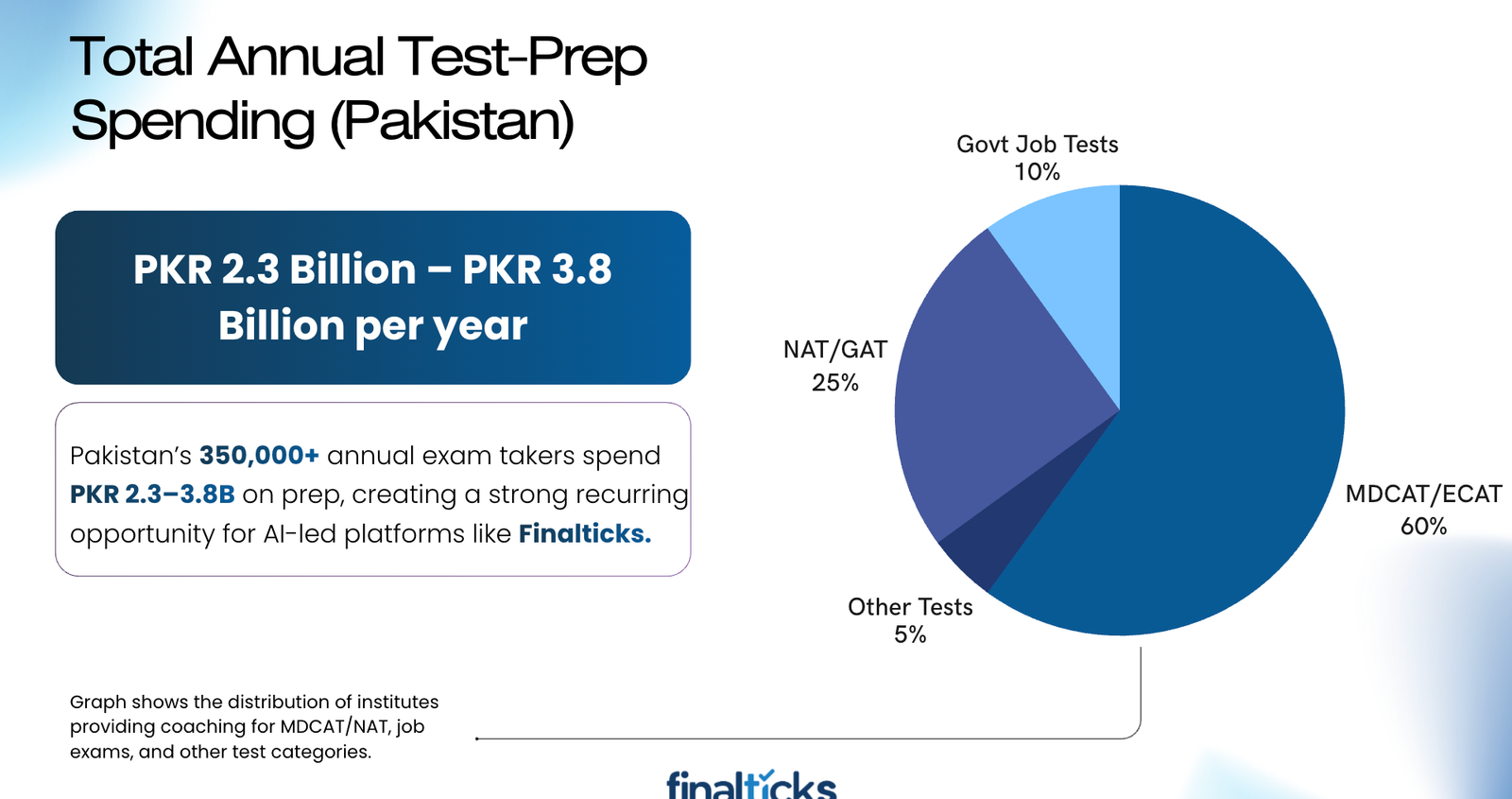
The test-preparation slide proposes annual spending of PKR 2.3–3.8 billion and references 350,000+ exam takers. Its pie chart is described as a distribution of coaching institutes: MDCAT/ECAT 60%, NAT/GAT 25%, government job tests 10%, and other tests 5%.
The chart is not treated as measured spending share or a recommended budget split. The 350,000+ exam-taker cohort and broader TAM require scope reconciliation before being combined.
POSITIONING
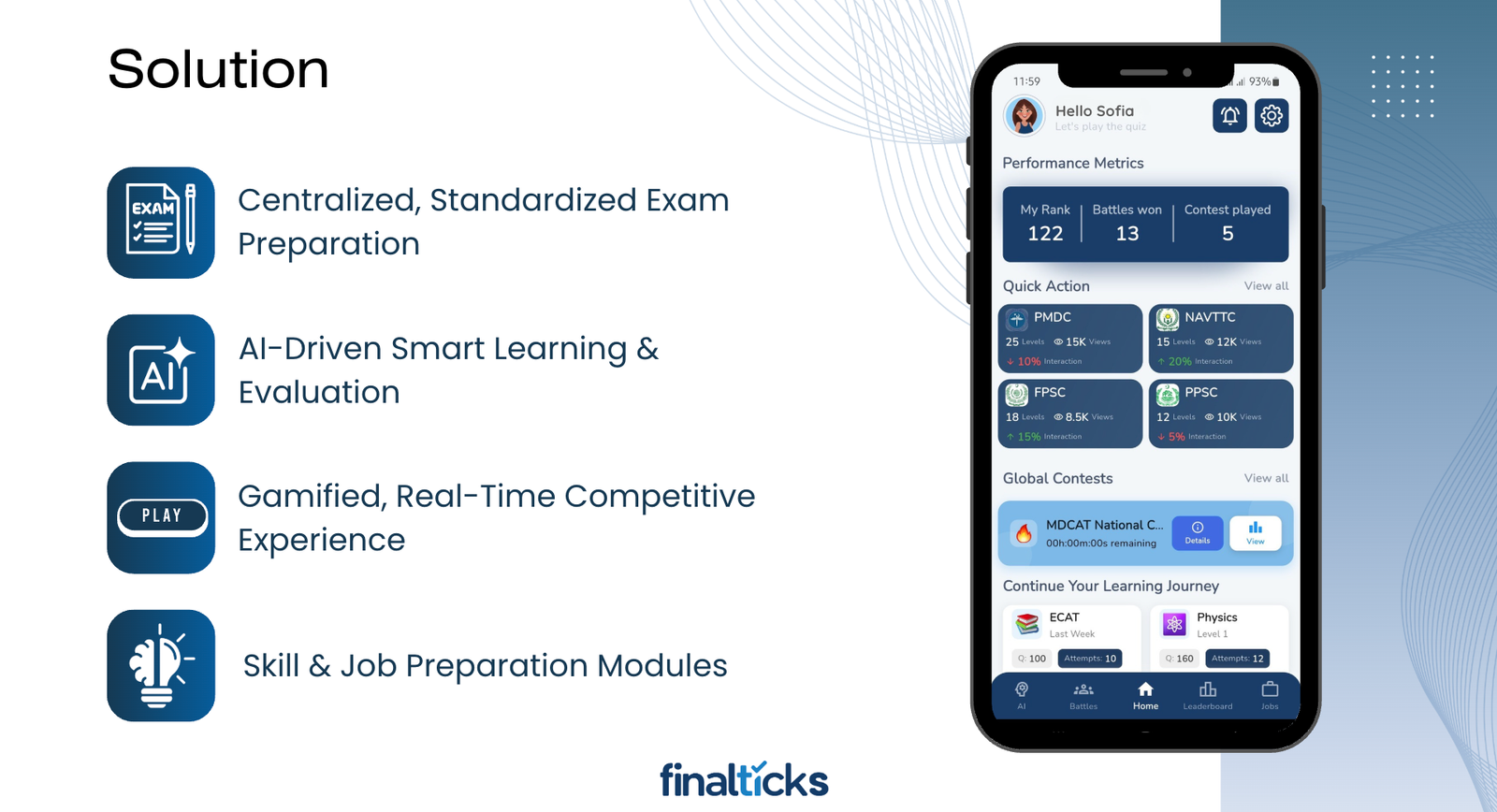
Centralised exam preparation provides a clear starting point for the proposed offer.
AI-driven learning and evaluation are presented as product positioning in the deck.
Competitive practice and skill or job-preparation modules broaden the planned learning journey.
BUSINESS RECOMMENDATIONS
Test exam-specific messages and landing journeys, then compare qualified acquisition cost, activation, paid conversion, and learner retention by segment. MDCAT/ECAT can be an initial research priority based on the deck’s category mix; a larger budget should depend on observed economics and product readiness.
The work demonstrates market framing and positioning. It does not claim achieved revenue, market penetration, or learning outcomes.